|
STATIONERIES
|
|
CV.
Aldira adalah perusahaan yang bergerak
di bidang pemasok barang dan jasa
Service kami : Pembelian dengan Pembayaran Tunda dan Gratis Biaya Antar Team management kami Selalu Siap melayani Anda |
|
|
 |
WIKIPEDIA
|
Book Before the invention and adoption of the printing
press, almost all books were copied by hand, making books expensive
and comparatively rare. |
Pencil A pencil is a writing or drawing instrument consisting of a thin stick of pigment (usually graphite, but can also be coloured pigment or charcoal) and clay, usually encased in a thin wood cylinder, though paper and plastic sheaths are also used. Pencils are distinct from pens, which use a liquid marking material. |
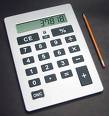
Caculator A calculator is device for performing mathematical
calculations, distinguished from a computer by its having a limited
problem solving ability and an interface optimized for interactive
calculation rather than programming. Calculators can be hardware or
software, and mechanical or electronic, and are often built into devices
such as PDAs or mobile phones. Modern electronic calculators are generally small, digital, (often pocket-sized) and usually inexpensive. In addition to general purpose calculators, there are those designed for specific markets; for example, there are scientific calculators which focus on advanced math like trigonometry and statistics, or even have the ability to do computer algebra. Modern calculators are more portable than most computers, though most PDAs are comparable in size to handheld calculators. |
Photocopier A photocopier (or copier) is a machine that makes paper copies of documents and other visual images quickly and cheaply. Most current photocopiers use a technology called xerography, a dry process using heat. (Copiers can also use other output technologies such as ink jet, but xerography is standard for office copying.) Xerographic office photocopying was introduced by Xerox in the 1960s, and over the following 20 years it gradually replaced copies made by Verifax, Photostat, carbon paper, mimeograph machines, and other duplicating machines. The prevalence of its use is one of the factors that prevented the development of the paperless office heralded early in the digital revolution. Photocopying is widely used in business, education, and government. There have been many predictions that photocopiers will eventually become obsolete as information workers continue to increase their digital document creation and distribution, and rely less on distributing actual pieces of paper. However, photocopiers are undeniably more convenient than computers for the very common task of creating a copy of a piece of paper. |